


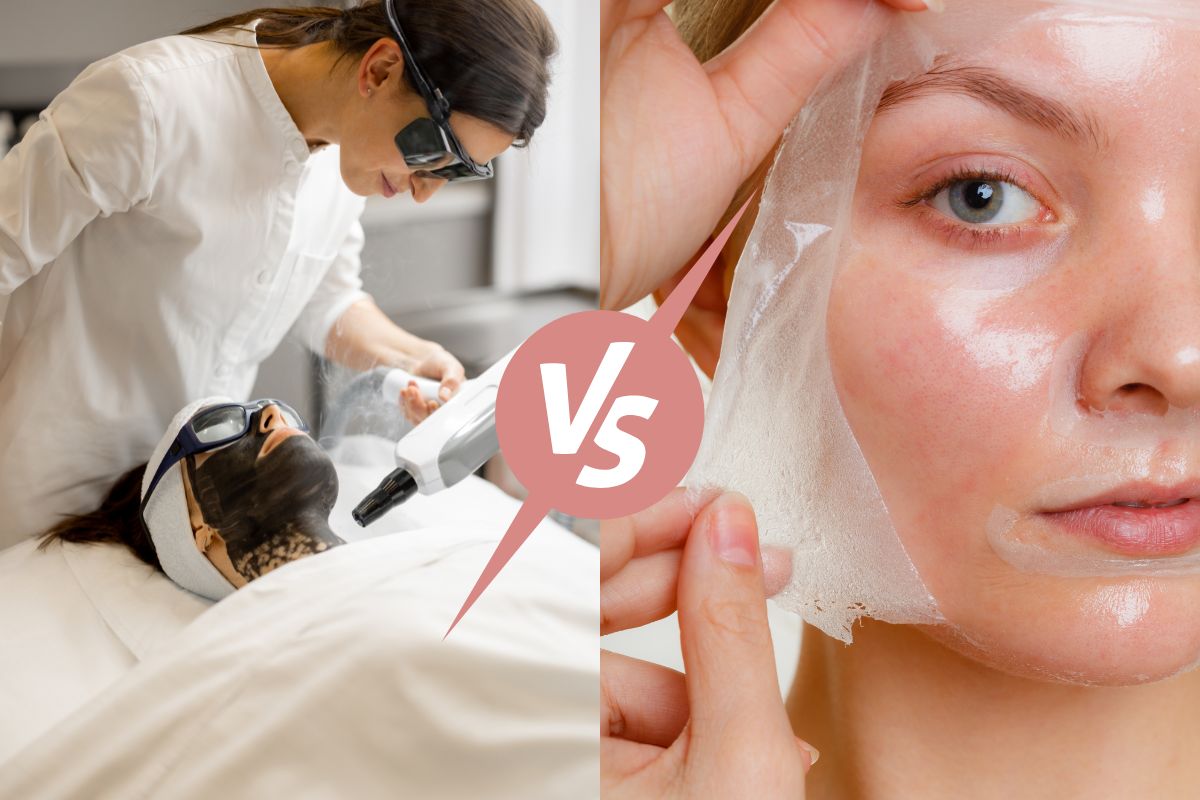
In the realm of aesthetic treatments, carbon laser peel vs chemical peel treatments have emerged as powerful options to rejuvenate and revitalise skin. For more severe skin concerns, advanced treatments like carbon dioxide laser resurfacing can be considered. These innovative procedures have the capability to address a wide range of skin concerns, from acne scars and pigmentation issues to wrinkles and sun damage. As individuals seek effective solutions to enhance their appearance and boost self-confidence, understanding the science behind these treatments becomes crucial to make informed decisions about skin care.
This article delves into the intricacies of laser peel treatment and chemical peels, exploring their mechanisms of action, benefits, and potential side effects. By comparing these two popular skin rejuvenation methods, including the effectiveness of chemical peeling versus laser treatments, readers will gain valuable insights into which approach might be best suited for their unique skin needs. Furthermore, the discussion will shed light on various types of treatments, including carbon laser peel and non-ablative laser techniques, as well as different chemical peel formulations designed to tackle specific skin concerns.
The Science Behind Skin Rejuvenation
Understanding the science behind skin rejuvenation is essential to appreciate the effectiveness of treatments like laser peel treatment and chemical peels. These procedures aim to address various skin concerns by targeting specific layers of the skin and stimulating natural healing processes.
Skin Structure and Ageing Process
The skin consists of three main layers: the epidermis, dermis, and hypodermis.
The epidermis, the outermost layer, protects against environmental factors and contains melanocytes responsible for skin colour. The dermis, lying beneath, houses collagen and elastin fibres that provide structure and elasticity. As we age, the skin’s ability to regenerate slows down, leading to visible signs of ageing such as wrinkles, fine lines, and uneven texture. A medium chemical peel can effectively address moderate skin issues such as fine lines and pigmentation problems. For severe skin damage and deep wrinkles, a deep chemical peel can be a more suitable option.
Collagen Production and Skin Health
Collagen, a protein found abundantly in the dermis, plays a crucial role in maintaining skin health and appearance. It provides strength and support to the skin, keeping it firm and supple. However, collagen production naturally decreases with age, contributing to the formation of wrinkles and sagging skin. Skin rejuvenation treatments often target collagen production to improve skin texture and reduce signs of ageing.
Importance of Cell Turnover and Dead Skin Cells
Cell turnover refers to the process by which new skin cells are produced in the deeper layers of the epidermis and move to the surface, replacing old, dead cells. A light chemical peel can improve skin texture and tone by promoting cell turnover. This process is vital for maintaining healthy, radiant skin. As we age, cell turnover slows down, leading to a build-up of dead skin cells and a dull complexion. Skin rejuvenation treatments aim to accelerate this process, revealing fresher, younger-looking skin.
Both laser peel treatment and chemical peels work by removing the outermost layer of dead skin cells, stimulating collagen production, and promoting cell turnover. Carbon laser resurfacing uses focused light energy to target specific skin layers, while chemical peels employ various solutions to exfoliate the skin. These treatments can address a range of concerns, including acne scars, pigmentation issues, and sun damage.
Understanding these fundamental aspects of skin biology helps explain why treatments like laser carbon peel and chemical peels are effective in rejuvenating the skin. By targeting specific skin layers and processes, these procedures can lead to significant improvements in skin texture, tone, and overall appearance.
Understanding Laser Peel Treatments
Laser treatment for treating uneven skin tone, dark patches or even severe inflammatory acne has gained popularity as an effective method for skin resurfacing. This advanced technique uses focused light energy to improve skin texture, reduce signs of ageing, and address various skin concerns.
Types of Laser Peels
There are several types of laser peels available, each designed to target specific skin issues. The most common types include:
- Carbon Laser Peel: Also known as the “Hollywood Peel,” this treatment involves applying a layer of liquid carbon to the skin before using a laser to remove it. It’s particularly effective for treating oily skin and enlarged pores.
- Erbium Laser Resurfacing: This technique is gentler than traditional CO2 lasers and is suitable for treating fine lines, wrinkles, and mild to moderate sun damage.
- Non-ablative Laser: These treatments heat the underlying skin tissue without damaging the surface, stimulating collagen production and improving skin tone.
How Laser Peels Work
Laser peel treatments work by directing concentrated beams of light at specific areas of the skin. The laser energy removes the outer layer of dead skin cells, stimulating the production of new skin cells and collagen. This process helps to:
- Reduce fine lines and wrinkles
- Improve skin texture and tone
- Minimise the appearance of acne scars and sun damage
- Address pigmentation issues
The depth and intensity of the treatment can be adjusted based on the individual’s skin concerns and desired results.
Benefits of Laser Peels
Laser peel treatments offer numerous benefits for skin rejuvenation:
- Precision: Lasers can target specific areas without affecting surrounding tissue.
- Customisation: Treatment parameters can be adjusted to suit different skin types and concerns.
- Collagen Stimulation: The heat from the laser encourages collagen production, leading to firmer, more youthful-looking skin.
- Minimal Downtime: Many laser peel treatments require little to no recovery time, allowing patients to resume their daily activities quickly.
- Long-lasting Results: With proper skincare, the effects of laser peels can last for several months to a year.
- Versatility: Laser peels can address multiple skin concerns in a single treatment, making them a comprehensive solution for skin rejuvenation.
While laser peel treatments offer significant benefits, it’s essential to consult with a qualified professional to determine the most suitable type of laser peel for your skin type and concerns. They can also provide guidance on potential side effects and necessary precautions to ensure optimal results and safety.
Which Laser Treatment in best for you
Let’s compare Carbon Laser Peel, Erbium Laser Resurfacing, and Non-ablative Laser Skin Rejuvenation:
| Carbon Laser Peel | Erbium Laser Resurfacing | Non-ablative Laser Skin Rejuvenation | |
|---|---|---|---|
| Invasiveness | Minimally invasive, non-ablative | Ablative (removes layers of skin) | Least invasive |
| Target Areas | Primarily targets the skin’s surface | Surface and moderately deep | Deeper skin layers |
| Recovery Time | Minimal to none | Usually 5-7 days | Minimal to none |
| Benefits | Reduces oil production, Minimizes pores, Evens skin tone, Mild exfoliation | Reduces fine lines and wrinkles, Improves skin texture and tone, Treats acne scars and age spots | Improves skin tone and texture, Reduces fine lines and mild wrinkles, Treats minor facial scars and certain types of pigmentation |
| Best for | Oily skin, mild acne, enlarged pores, and dull complexion | Moderate to deep wrinkles, sun damage, and acne scars | Mild to moderate skin issues, those who want improvement with minimal recovery time |
Each treatment has its own strengths and is suited for different skin concerns and patient preferences. The choice between these treatments often depends on the specific skin issues, desired results, and how much downtime the patient can accommodate.
Exploring Chemical Peels
Chemical peels are a popular skin rejuvenation treatment that uses chemical solutions to exfoliate and improve the appearance of the skin. These treatments can address various skin concerns, including fine lines, wrinkles, acne scars, and pigmentation issues.
Types of Chemical Peels
Chemical peels are categorised based on their depth of penetration:
Superficial Peels: These mild peels use alpha-hydroxy acids (AHAs) or beta-hydroxy acids (BHAs) to gently exfoliate the outermost layer of the skin. A light chemical peel, a type of superficial peel, improves skin texture and tone while reducing the appearance of fine wrinkles. They are suitable for treating minor skin concerns and require minimal downtime. The recovery process is relatively straightforward, with temporary redness and irritation, and emphasizes the importance of post-treatment skincare and sun protection.
Medium Peels: These peels use trichloroacetic acid (TCA) or glycolic acid to penetrate deeper into the skin, addressing moderate skin issues such as fine lines and pigmentation problems. A medium chemical peel allows for noticeable smoothness of the skin after treatment. The typical downtime can last from seven to fourteen days, during which the skin undergoes a healing process. Post-procedure care includes managing potential discomfort and following specific skincare guidelines to ensure optimal recovery.
Deep Peels: The strongest type of chemical peel, deep peels use phenol to penetrate the lower dermal layer. They are used to treat severe skin damage, deep wrinkles, and scars but require significant downtime and should only be performed by experienced professionals. Deep chemical peels offer dramatic improvements in skin appearance, but the recovery process is extensive, involving a longer healing period and meticulous post-treatment care to manage risks and side effects.
How Chemical Peels Work
Chemical peels work by applying a solution to the skin that causes controlled damage to the outer layers. This process triggers the skin’s natural healing response, promoting cell turnover and collagen production. The depth of the peel determines the extent of skin renewal and the potential results.
During the treatment, patients may experience a tingling or burning sensation as the solution is applied. After the procedure, the treated skin will begin to peel, revealing fresher, smoother skin underneath.
Benefits of Chemical Peels
Chemical peels offer several advantages for skin rejuvenation:
- Versatility: They can address multiple skin concerns simultaneously, including acne, sun damage, and signs of ageing.
- Customisation: The strength and type of peel can be tailored to suit individual skin types and concerns.
- Improved Skin Texture: Chemical peels can help smooth rough skin and reduce the appearance of fine lines and wrinkles.
- Enhanced Product Absorption: By removing dead skin cells, chemical peels allow for better penetration of skincare products.
- Collagen Stimulation: Deeper peels can stimulate collagen production, leading to firmer, more youthful-looking skin.
While chemical peels can provide significant improvements in skin appearance, it’s crucial to consult with a qualified skincare professional to determine the most suitable type of peel for your skin type and concerns. They can also advise on potential side effects and necessary precautions to ensure optimal results and safety.
Comparing Laser Peel vs Chemical Peel Treatment
When considering skin rejuvenation treatments, it’s essential to understand the differences between laser peel treatment and chemical peels. Both methods offer unique benefits and considerations for individuals seeking to improve their skin’s appearance.
Effectiveness
Laser peel treatment and chemical peels can be highly effective in addressing various skin concerns. Laser peels, particularly carbon laser peel and Non-ablative Laser Skin Rejuvenation treatments, are known for their precision in targeting specific areas of the skin. They can penetrate deeper layers, making them particularly effective for treating deep wrinkles, severe acne scars, and significant sun damage. Laser resurfacing also stimulates collagen production, leading to long-lasting improvements in skin texture and firmness.
Chemical peeling, on the other hand, offers a broader range of treatment options. Superficial peels can address minor skin concerns, while deep chemical peels can tackle more severe issues like deep wrinkles and extensive sun damage. Chemical peeling is particularly effective in treating pigmentation issues and can provide significant improvements in skin tone and texture. It is also suitable for different skin types, but individuals with darker skin tones should be aware of the potential risks and consult with a professional to make an informed decision about their skincare.
Downtime and Recovery
The downtime and recovery period for these treatments can vary significantly. Non-ablative laser treatments typically require minimal downtime, allowing patients to resume their daily activities almost immediately. However, more intensive laser resurfacing procedures may necessitate a longer recovery period, during which the skin may appear red and swollen.
Chemical peels have varying recovery times depending on their depth. Superficial peels often require little to no downtime, with mild redness subsiding within a day or two. Medium and deep chemical peels, however, can involve a more extended recovery period, with redness, peeling, and sensitivity lasting for several days to weeks. A medium chemical peel typically involves a recovery period of seven to fourteen days, with noticeable skin smoothness after treatment.
Suitability for Different Skin Types
Laser peel treatments and chemical peels can be suitable for various skin types, but certain considerations apply. Laser treatments are generally safe for most skin types but may carry a higher risk of pigmentation changes in darker skin tones. It’s crucial to consult with a qualified professional to determine the most appropriate laser settings for your skin type.
Chemical peels offer options for different skin types and concerns. Superficial peels are generally safe for all skin types, while medium and deep peels may require more caution for individuals with darker skin tones due to the risk of hyperpigmentation. A skincare professional can help determine the most suitable type of chemical peel based on your skin type and specific concerns.
Both laser peel treatment and chemical peels have their unique advantages in skin rejuvenation. The choice between these treatments depends on individual skin concerns, desired results, and tolerance for downtime. Consulting with a qualified professional is essential to determine the most appropriate treatment for your skin rejuvenation needs.
Conditions Treated by Chemical Peels and Laser Treatments
Chemical peels and laser treatments are highly effective in addressing a variety of skin concerns, making them popular choices for skin rejuvenation. Chemical peels can treat a range of issues, including fine lines and wrinkles, uneven skin tone, acne scars, and the build-up of dead skin cells. They are also effective in reducing hyperpigmentation and reversing sun damage, revealing a more even and radiant complexion.
Laser treatments, on the other hand, are particularly adept at targeting fine lines and wrinkles, acne scars, and deep scars. They can also address pigmentation issues, blemishes, and sagging skin. The precision of laser treatments allows for targeted action, making them suitable for treating specific problem areas with minimal impact on surrounding tissues.
Both chemical peels and laser treatments can be customised to suit individual skin types and concerns, ensuring that each patient receives the most effective treatment for their unique needs.
Assessing Your Skin Rejuvenation Needs
When considering skin rejuvenation treatments such as laser peel treatment or chemical peels, it’s crucial to assess your individual needs and concerns. This evaluation helps determine the most suitable approach for achieving optimal results.
Common Skin Concerns
Various skin issues can be addressed through laser peel treatment or chemical peels. These include:
- Fine lines and wrinkles: Both treatments can help reduce the appearance of these signs of ageing.
- Acne scars: Laser resurfacing and chemical peels can be effective in minimising the visibility of acne scars.
- Pigmentation issues: Uneven skin tone, sun spots, and melasma can be improved with these treatments.
- Sun damage: Both laser peel treatment and chemical peels can help reverse the effects of sun damage on the skin.
- Enlarged pores: These treatments can help refine pore size and improve overall skin texture.
- Dull complexion: Skin rejuvenation treatments can restore a more radiant and youthful appearance.
Factors Affecting Treatment Choice
Several factors influence the selection of the most appropriate treatment:
- Skin type and tone: Certain treatments may be more suitable for specific skin types. For instance, individuals with darker skin tones may need to exercise caution with some laser treatments to avoid potential pigmentation changes.
- Severity of skin concerns: The extent of skin damage or the depth of wrinkles can determine whether a laser peel treatment or a chemical peel is more appropriate.
- Desired results and timeline: Some treatments offer more immediate results, while others may require multiple sessions for optimal outcomes.
- Tolerance for downtime: Consider your ability to accommodate recovery time when choosing between treatments. Non-ablative laser treatments and superficial chemical peels typically require minimal downtime, while deeper treatments may necessitate a longer recovery period.
- Medical history: Certain health conditions or medications may influence the suitability of different treatments.
By carefully assessing these factors and consulting with a qualified skincare professional, you can determine whether a laser peel treatment, chemical peel, or a combination of approaches is best suited to address your skin rejuvenation needs.
The Ideal Candidate for Skin Rejuvenation Treatments
The ideal candidate for chemical peels and laser treatments is someone looking to improve the overall appearance and health of their skin. These treatments are particularly beneficial for individuals with fine lines and wrinkles, uneven skin tone, acne scars, and a build-up of dead skin cells. They can also effectively address hyperpigmentation and sun damage, helping to restore a more youthful and even complexion.
However, not everyone is a suitable candidate for these treatments. Individuals with sensitive skin, darker skin tones, or certain skin conditions such as eczema or psoriasis may need to exercise caution. Those with active acne or rosacea, as well as open wounds or sores on the skin, should also avoid these treatments until their skin has healed. Consulting with a qualified skincare professional is essential to determine the best course of action based on individual skin types and concerns.
The Procedure
The procedures for chemical peels and laser treatments vary depending on the type and depth of the treatment.
Chemical peels involve applying a chemical solution to the skin, which causes the top layers to peel off, revealing smoother and more youthful skin underneath. The procedure typically takes between 15 to 60 minutes, depending on the depth of the peel. Superficial peels are quick and involve minimal discomfort, while deeper peels may require more time and result in a more intense peeling process.
Laser treatments use a laser device to send pulsed light to the target area, stimulating collagen production and tightening the skin. The procedure usually takes between 30 to 60 minutes, depending on the type and depth of the treatment. Non-ablative lasers are less invasive and require minimal downtime, while more intensive laser resurfacing treatments may necessitate a longer recovery period.
Both procedures are designed to rejuvenate the skin by promoting cell turnover and collagen production, leading to a smoother, firmer, and more radiant complexion.
Risks and Side Effects
Both chemical peels and laser treatments carry some risks and potential side effects, which can include redness and irritation, infection, scarring, burns, and post-inflammatory hyperpigmentation (PIH). These risks can be minimised by choosing a qualified and experienced practitioner and following proper aftercare instructions.
Redness and irritation are common immediately after the treatment and usually subside within a few days. Infection and scarring are rare but can occur if the skin is not properly cared for during the healing process. Burns are more likely with deeper peels and more intensive laser treatments, highlighting the importance of professional application. PIH is a particular concern for individuals with darker skin tones and can be managed with appropriate pre- and post-treatment care.
By adhering to the guidance of a qualified professional and following recommended aftercare protocols, patients can significantly reduce the likelihood of adverse effects and achieve optimal results.
Conclusion
Skin rejuvenation treatments like laser peels and chemical peels have revolutionised the field of aesthetic medicine, offering effective solutions to address a wide range of skin concerns. These treatments have a significant impact on improving skin texture, reducing signs of ageing, and boosting overall skin health. The choice between laser peel treatment and chemical peels depends on individual skin types, specific concerns, and desired outcomes, making it crucial to consult with a qualified professional to determine the most suitable approach.
Both laser peels and chemical peels have their unique advantages, and the decision to opt for one over the other should be based on a thorough assessment of one’s skin rejuvenation needs. As the field of aesthetic medicine continues to advance, these treatments are likely to evolve further, providing even more targeted and effective solutions for those seeking to enhance their skin’s appearance and health. Ultimately, the journey to achieving radiant, youthful-looking skin is a personal one, and with the right guidance and treatment plan, individuals can unlock the full potential of their skin’s natural beauty.
FAQs
Which is more effective, a chemical peel or a laser treatment?
Many individuals prefer chemical peels as they are a long-standing, traditional method. However, laser treatments are often regarded by specialists as more precise and reliable for targeting specific skin concerns.
Which is more suitable for treating melasma, laser or chemical peels?
Both laser and chemical peels can be highly effective for treating melasma. The choice between the two should be based on the specific type of melasma you have and your individual circumstances, as each has its own advantages and drawbacks.
Do chemical peels help rejuvenate the skin?
Yes, chemical peels can rejuvenate the skin effectively. They are used to refresh the appearance of ageing skin on the face, neck, and hands, and can also address medical skin conditions such as acne and actinic keratosis.