

Black Friday all November: 20% off treatments.
Excludes treatments already on offer. Ends 30 Nov.
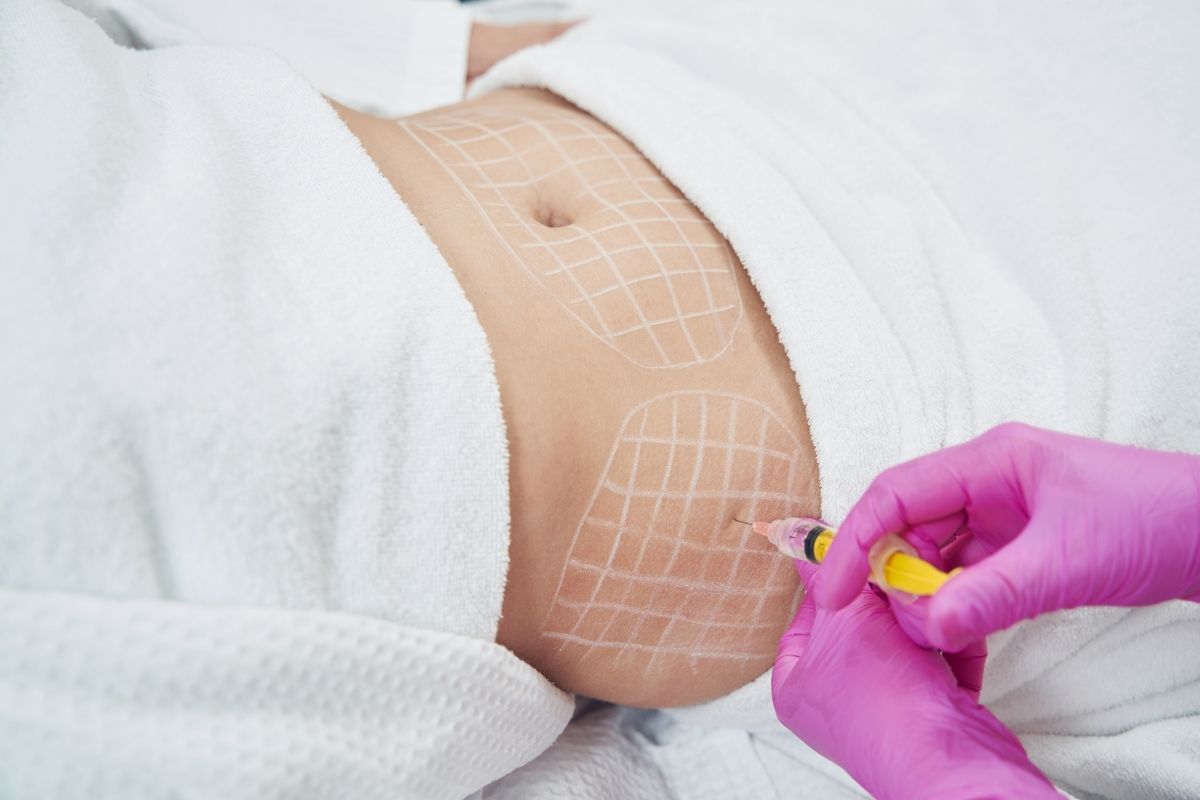
If you’ve been looking into fat dissolving injections, you may have seen Aqualyx vs Lemon Bottle discussed on social media as if they were the same thing. They aren’t. Aqualyx is a CE-marked medical device designed for injection into fat to dissolve it, while Lemon Bottle is registered as a cosmetic product and is not approved or regulated in the same way for injection. This guide is for anyone considering fat dissolving injections and comparing Aqualyx and Lemon Bottle.
If you’re comparing fat dissolving treatments and want clear, reliable information before booking, this guide explains what Aqualyx and Lemon Bottle are used for, how their regulation differs, the safety and side-effect questions worth asking, and why that difference matters when someone is proposing to inject a product into your body. In 2025 the UK’s pharmacy regulator warned pharmacy professionals about unregulated products, naming Lemon Bottle. At Skin Logic we use Aqualyx, and we don’t offer Lemon Bottle.
Aqualyx is an injectable treatment for small, stubborn pockets of fat, such as under the chin, the stomach, the flanks and the inner thighs, with the double chin being a common treatment area. Aqualyx contains a modified form of deoxycholate as its active ingredient. Its active ingredient is a modified form of deoxycholate in a slow-release gel. It’s injected into the fat layer, and the treated area is then massaged with an ultrasound device. Your body clears the released fat naturally over the following weeks as the broken-down fat cells are metabolised.
Aqualyx isn’t a weight-loss treatment; it’s used for fat reduction and body contouring in areas that haven’t shifted with diet and exercise. Most people need a course of sessions about four weeks apart, and the number depends on the area being treated. Many people need two to four sessions for optimal results. Aqualyx has been used in the UK since 2013.
Lemon Bottle is marketed online as a fat dissolving solution. Lemon Bottle includes riboflavin and lecithin in its formulation. It was introduced around 2023 and is a newer treatment with limited clinical evidence. It lacks similar regulatory approval to Aqualyx and is considered a cosmetic product.
It’s widely sold to the public and to beauty businesses, and it’s often used outside a clinic setting. The company behind it says it’s registered on the UK’s Submit Cosmetic Product Notification portal. That portal is for cosmetic products. In UK law, cosmetics are products applied to the outside of the body, so a cosmetic notification isn’t an approval to inject a product.
| Aqualyx | Lemon Bottle | |
| Classed as | Medical device, CE marked | Cosmetic product (according to the brand) |
| Made to be injected | Yes, into fat, alongside ultrasound | The brand says some UK insurers cover injecting it |
| Regulator warnings | None that we’re aware of | GPhC warning to pharmacy professionals, 2025 |
| Used at Skin Logic | Yes | No |
| Comparison | Aqualyx | Lemon Bottle |
| Regulatory status | CE-marked medical device; proper training is required for administration. | Considered a cosmetic product and lacks similar regulatory approval. UK regulators have warned about unlicensed products like Lemon Bottle. |
| Clinical evidence and history | Has published clinical evidence and a well-established history; used in UK clinics since 2013. | A newer treatment, introduced around 2023, with limited clinical evidence and limited long-term studies. |
| Active ingredients | A modified form of deoxycholate. | Riboflavin and lecithin are included in its formulation. |
| Cost for chin treatment | Starts from £400. | Starts from £175, so it is generally the more budget-friendly option. |
| Side effects and downtime | Both treatments can involve mild tenderness and swelling. Aqualyx may also cause swelling and bruising that can last around five days. | Both treatments can involve mild tenderness and swelling. Lemon Bottle is marketed as causing less swelling and milder downtime; redness and bruising can occur around injection sites. |
| Expected results | Results are generally more predictable and visible within 4–6 weeks. Results depend on keeping your weight stable. | Results may appear within 2–4 weeks, but can vary because efficacy and long-term results are less established. |
The honest answer is that there isn’t enough published clinical safety data to say. There is also very limited clinical evidence for Lemon Bottle compared with more established options. In April 2025 the General Pharmaceutical Council (GPhC), which regulates pharmacists in Great Britain, wrote to pharmacy professionals about “non-medicinal, unregulated and unlicensed products, including Lemon Bottle“. Published concerns also include incomplete ingredient disclosure and unverified ingredient sourcing, which matter when assessing safety in the aesthetics industry. It said products like these may not list all their ingredients and have little or no clinical safety data.
We can’t tell you a product is safe without that evidence, which is why we don’t use it.
Any fat dissolving injection can cause swelling, redness, tenderness and bruising for a few days, but both treatments usually involve minimal downtime and minimal discomfort, with redness and bruising sometimes appearing around the injection site. Lemon Bottle is marketed as causing less post-treatment swelling than Aqualyx, and many clients report little swelling. The extra risks come from not knowing exactly what’s in a product, and from treatment given by someone without proper training. Those risks include infection, lumps under the skin and uneven results. They’re higher when a product is bought online and injected outside a clinic.
If you’ve had Lemon Bottle and you’re worried about a reaction, contact the person who treated you or your GP. If you have a fever, spreading redness or severe pain, call NHS 111 or get urgent care.
The most common side effects of Aqualyx are swelling, redness, tenderness and light bruising in the treated area. They usually settle within a few days, and recovery is usually straightforward despite mild swelling and tenderness. Swelling is often most noticeable for the first day or two, especially under the chin.
Before treatment we go through your medical history and check that Aqualyx is right for the area. Sessions are usually about four weeks apart. Small areas such as the chin often need fewer sessions, but many treatment plans still involve two to four sessions overall; larger areas such as the thighs may need more.
Results are usually visible within 4–6 weeks after treatment. Aqualyx also has a more established clinical history, and results are generally more predictable and permanent provided weight is maintained through a healthy lifestyle. See our guide to how effective Aqualyx is and what to expect for a day-by-day view.
Whichever clinic you choose, you should get clear answers to these before you’re treated.
The right treatment depends on your goals, budget, and the area being treated. For example, Aqualyx for the chin starts from £400, while Lemon Bottle for the chin starts from £175, making Lemon Bottle the more budget-friendly option for some people.
A good practitioner will be happy to answer all of them, and won’t rush you into booking.
We use Aqualyx because it’s our preferred choice for non surgical fat reduction when safety and clinical evidence matter, and it’s classed as a medical device. Every treatment starts with a consultation at our Wimpole Street clinic, near Harley Street, where we check that the treatment suits you, explain how many sessions you’re likely to need, and make clear that the aim is fat reduction and a more contoured physique, not weight loss. It is used to target stubborn areas without invasive surgery. If Aqualyx isn’t the right fit, we’ll tell you.
Find out more about Aqualyx fat dissolving injections in London, or book your consultation. The consultation fee is redeemed against your treatment.
Does Skin Logic offer Lemon Bottle? No. We only use products we’re confident are made and regulated for injection, which is why we use Aqualyx.
Is Aqualyx better than Lemon Bottle? We can’t compare results fairly, because Lemon Bottle and Aqualyx are the two treatments people usually ask us to weigh up, but Lemon Bottle has so little published clinical data. What we can compare is how they’re regulated: Aqualyx is a CE-marked medical device, and Lemon Bottle is registered as a cosmetic. Aqualyx also has more clinical evidence behind it in the UK market and has been used in UK clinics since 2013.
Is Lemon Bottle legal in the UK? The company behind it says it’s registered as a cosmetic product in the UK. Whether it should be injected is a separate question, and the GPhC has warned pharmacy professionals about it.
I’ve had Lemon Bottle before. Can I have Aqualyx? Usually, yes. Tell us when and where you were treated at your consultation, and we’ll make sure the area has fully settled before we treat it; after that, maintaining a stable weight with regular exercise can help reduce the chance of new fat building up again in treated areas.
Sources
Want to know more about how our Aesthetics & Laser Clinic in London can help you? Send us a message with your concern and we will get back to you.

20% off on any treatment booked by 30 November.
Not included: Aqualyx, Lipofirm, Aquashine, Cosmelan, Laser Hair Removal, IPL skin rejuvenation and the Glutathione IV drip. These already have their own offers.
Please fill in the form and someone will call you to arrange your consultation.

